Choosing among outdoor LED display manufacturers should begin with the actual project environment—not with the highest brightness, smallest pixel pitch or lowest quotation. A roadside billboard, coastal installation, building façade and transportation hub may all require different brightness, cabinet protection, maintenance access and thermal-management strategies.
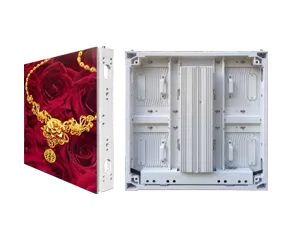
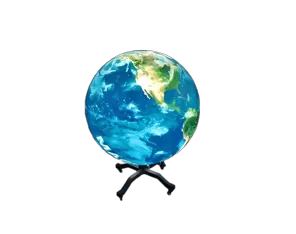
KMTEK's conventional outdoor LED range currently covers multiple product families from approximately P2.97 to P10+, with selected series offering refresh rates up to 7680Hz and brightness up to 12,000 cd/m².
Before comparing an outdoor LED screen supplier, define where and how the display will operate.
Important questions include:
Is the screen exposed to direct sunlight?
How much rain and humidity does the location receive?
Is the project near the coast?
What are the maximum and minimum ambient temperatures?
Is the screen beside a road or installed on a building façade?
How far away will the audience normally stand?
Is front or rear maintenance possible?
These conditions determine which product characteristics actually matter.
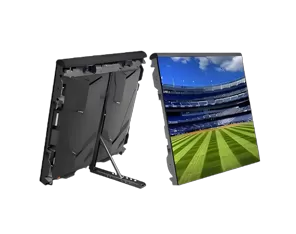
KMTEK positions its conventional outdoor LED displays for applications including commercial districts, squares, stadiums, building façades and transportation-related environments, while emphasizing high brightness, weather resistance and wide viewing angles.
A reliable supplier should therefore recommend a configuration from your environmental data rather than immediately quoting the product with the most impressive specification sheet.
Brightness is critical outdoors, but higher brightness is not automatically better.
Displays facing strong direct sunlight may require much greater brightness than screens installed under partial shade. However, unnecessarily high brightness can increase energy consumption, heat generation and operating demands.
Pixel pitch should be selected mainly from viewing distance and content detail. A roadside advertising screen viewed from tens of meters away does not necessarily benefit from the same fine pitch as a screen installed close to pedestrian traffic.
KMTEK's current outdoor range includes pixel pitches from roughly P2.97 through P10 and beyond, while selected FO3 FC and FO4 FC products publish brightness up to 12,000 cd/m² and refresh rates up to 7680Hz.
A practical selection sequence is:
Environment → Viewing Distance → Screen Size → Pixel Pitch → Brightness → Cabinet Design
This prevents buyers from paying for specifications that do not improve the actual viewing experience.
IP protection is one of the first specifications buyers check when comparing LED outdoor screen manufacturers, but the rating alone does not explain the complete weatherproofing design.
KMTEK lists IP65 among the main features of its conventional outdoor LED category and notes that outdoor protection may involve front-side IP65 and rear-side protection that varies according to product design.
Buyers should also ask about:
module sealing;
cabinet sealing;
gaskets and conformal coating;
cable and connector protection;
drainage design;
ventilation and heat dissipation;
UV resistance;
corrosion protection.
KMTEK's published outdoor design guidance specifically mentions sealed modules, gaskets, conformal coatings, weatherproof aluminum or steel cabinets, drainage, ventilation and UV-resistant coatings.
This matters because water resistance is a system-level design issue, not simply an IP label printed on a brochure.
The purchase price of the LED modules is only one part of total project cost.
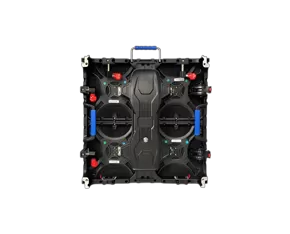
Cabinet design affects installation weight, structural requirements, cooling, module replacement and maintenance access.
For example, a rear-maintenance screen requires enough service space behind the display. If the installation is directly against a wall, creating that space can increase structural complexity and project cost.
Front-maintenance designs can be more practical in space-limited installations. KMTEK's ES3 Pro outdoor series, for example, supports front and rear module maintenance and uses a quick-locking structure for module removal.
When evaluating an outdoor LED screen supplier, ask:
Can modules be replaced from the front?
How are power supplies and receiving cards accessed?
What is the cabinet weight?
What structural support is required?
How much service clearance is needed?
How quickly can a failed module be replaced?
A screen that costs slightly less initially may become more expensive if maintenance access requires complex scaffolding or structural redesign.
A serious B2B evaluation should cover these eight areas:
1. Product range: Can the manufacturer match the required pixel pitch, screen size and outdoor application rather than forcing every project into one product family?
2. Outdoor protection: Confirm IP rating, cabinet sealing, drainage, connectors, UV protection and corrosion strategy.
3. Brightness capability: Ask for brightness appropriate to the actual sunlight conditions, not simply the maximum available specification.
4. Cabinet engineering: Evaluate weight, heat dissipation, installation method and front/rear maintenance access.
5. Calibration capability: Large outdoor screens require good brightness and color uniformity across modules and cabinets.
6. Quality control: Ask about module inspection, aging, finished-screen testing and production traceability.
7. Certifications: Verify which certifications are available and whether they satisfy the destination market and project requirements.
8. After-sales support: Confirm spare modules, power supplies, receiving cards, technical assistance and replacement-part availability.
KMTEK states that its production is ISO 9001 certified and lists CE, RoHS and FCC certifications, while also promoting OEM/ODM capability and integrated production from SMT through final assembly. These are useful supplier-evaluation signals, but project-specific documents should still be verified before ordering.
For an accurate quotation, provide:
| Buyer Information | Why It Matters |
|---|---|
| Installation city/country | Defines climate conditions |
| Screen dimensions | Determines project scale |
| Viewing distance | Helps select pixel pitch |
| Screen orientation | Affects sunlight exposure |
| Installation height | Influences structure/service planning |
| Maintenance access | Front or rear |
| Content type | Video, advertising, text or live content |
| Operating hours | Supports thermal/power planning |
| Required certifications | Defines project compliance |
| Power supply | Defines electrical configuration |
Where possible, also send façade drawings, site photographs and the expected viewing direction.
An experienced outdoor LED display manufacturer should be able to use this information to recommend a suitable pitch, brightness level, cabinet structure and maintenance method rather than quoting from screen size alone.
The best outdoor LED display manufacturers are not necessarily those publishing the highest brightness or fastest refresh rate.
A suitable supplier should be able to demonstrate that the proposed display matches your climate, viewing distance, sunlight conditions, installation structure, maintenance access and operating schedule.
Before comparing final quotations, evaluate the complete outdoor system: pixel pitch + brightness + weather protection + cabinet design + maintenance + quality control + project support.
Compare project experience, outdoor protection, brightness, cabinet design, calibration, quality control, certifications and after-sales support.
IP65 is commonly used for outdoor LED displays, but front and rear protection and the complete weatherproofing design should also be checked.
Brightness should be matched to ambient sunlight, viewing conditions and installation orientation rather than simply selecting the highest available value.
Verify the product specification, outdoor protection, maintenance method, testing, certifications, spare parts and supplier support.
Provide the location, screen size, viewing distance, orientation, installation height, maintenance access, content type, operating hours and electrical requirements.

I’m Engineer Liang, a LED display specialist with 20 years of hands-on experience. My work spans panel assembly, system integration, and performance optimization across various product lines.
I’ve provided on-site after-sales support in over 30 countries, It solves problems such as pixel failure and signal instability in large installation projects ranging from commercial billboards to stadium screens.These trips honed my ability to adapt solutions to local environmental conditions.
Remotely, I have remotely assisted hundreds of customers with display calibration, software debugging and diagnostic, and operational guidance, including fine-tuning color uniformity on LED screens and resolving connectivity issues with control systems etc.
I focus on practical problem-solving, ensuring timely, effective support to minimize display failure, protect the interests of customers.Keeping pace with LED tech advancements, I aim to deliver reliable expertise to clients worldwide.