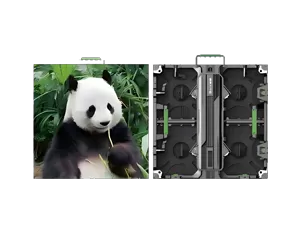
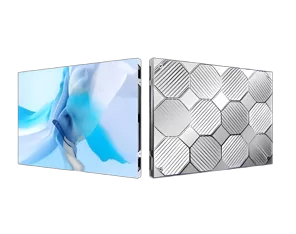
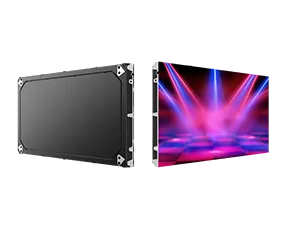
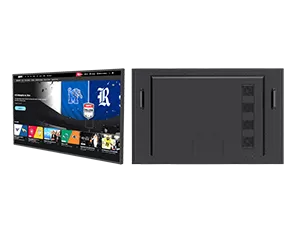
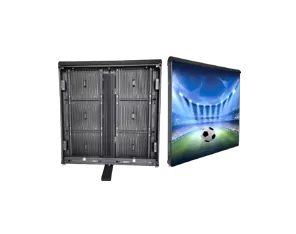
An LED display depends on the quality and compatibility of the modules behind its visible surface. For buyers comparing different suppliers, an LED module specification provides the technical information needed to evaluate pixel pitch, module dimensions, brightness, refresh rate, power consumption, and environmental performance. Checking these parameters together helps ensure that the selected module matches the cabinet, control system, installation environment, and intended viewing distance.
An LED module specification defines the physical, optical, electrical, and environmental characteristics of an LED module.
A complete specification sheet should normally include pixel pitch, module resolution, physical dimensions, brightness, refresh rate, grayscale, viewing angle, power consumption, operating temperature, and protection rating where applicable.
These specifications also determine compatibility. An LED module does not work independently; it must integrate with the cabinet, receiving card, power supply, control system, and other modules. A module with excellent image performance may still be unsuitable if its dimensions or electrical characteristics do not match the complete display.
The most important LED module parameters are those that affect image quality, system compatibility, electrical requirements, and operating conditions.
| Specification | What It Indicates | Why It Matters |
|---|---|---|
| Pixel pitch | Distance between pixels | Determines pixel density and viewing distance |
| Module size | Physical dimensions | Affects cabinet layout and replacement |
| Brightness | Light output | Determines application suitability |
| Refresh rate | Screen refresh frequency | Important for motion and camera use |
| Grayscale | Brightness levels | Influences image transitions |
| Viewing angle | Visible range | Affects audience positions |
| Power consumption | Electrical demand | Helps size the power system |
| IP rating | Environmental protection | Important for outdoor applications |
For example, KMTEK's Micro-COB configurations range from P0.625 to P1.875, with a listed 3840 Hz refresh rate, 16-bit grayscale, and 160° horizontal and vertical viewing angles. These figures show why a complete specification is more useful than judging a module by pixel pitch alone.
Pixel pitch, resolution, and module dimensions jointly determine the pixel density and physical structure of an LED display.
A smaller pixel pitch places more pixels into the same area, which can improve image detail for close-viewing applications. However, smaller pitch can also increase system cost and processing requirements.
Module dimensions are equally important. Modules must fit the cabinet structure and align correctly with neighboring modules. Otherwise, installation, replacement, and maintenance can become more complicated.
For this reason, buyers should check pixel pitch together with module size, resolution, cabinet dimensions, and final screen dimensions.
When comparing a GOB LED module with other module structures, buyers should evaluate protection, maintenance, optical performance, and application requirements together.
GOB is only one part of an LED module specification. Pixel pitch, LED package, PCB structure, brightness, refresh rate, power consumption, and environmental rating also affect the finished display.
A particular packaging method does not automatically determine overall display quality. The final result depends on the interaction between modules, cabinets, control systems, power systems, calibration, and installation.
Buyers should therefore request a complete specification sheet instead of evaluating a module based only on its packaging technology.
Indoor and outdoor LED modules require different specifications because their operating environments create different demands for brightness and protection.
Indoor modules can prioritize fine pixel pitch, close viewing, compact construction, and front maintenance. Outdoor modules generally require higher brightness, stronger environmental protection, and suitable cabinet sealing.
KMTEK's conventional outdoor LED display range covers approximately P3.33 to P10, with brightness up to 12,000 cd/m², refresh rates up to 7680 Hz, contrast up to 15,000:1, and IP65 protection.
These are manufacturer-listed specifications rather than universal requirements. Buyers should evaluate them according to the actual project environment and viewing conditions.
The final specification check should confirm that the proposed module meets the project's visual, mechanical, electrical, and environmental requirements.
Before ordering, buyers should verify:
Visual performance: pixel pitch, resolution, brightness, grayscale, contrast, and viewing angle.
Mechanical compatibility: module dimensions, cabinet dimensions, mounting method, and maintenance direction.
Electrical requirements: voltage, maximum and average power consumption, receiving-card compatibility, and power-supply capacity.
Environmental requirements: operating temperature, humidity, IP rating, and indoor or outdoor installation.
Maintenance: front or rear access, replacement method, spare modules, and calibration requirements.
For a project quotation, providing the screen dimensions, target pixel pitch, viewing distance, installation environment, and intended application gives the manufacturer enough information to recommend a compatible configuration.
A complete LED module specification should cover far more than pixel pitch. Module dimensions, resolution, brightness, refresh rate, grayscale, power consumption, viewing angle, environmental rating, and maintenance method all influence the final display system. The correct configuration depends on where the display will be installed, how close viewers will be, and how the cabinet and control system are designed. By checking these parameters together, buyers can reduce compatibility problems, simplify maintenance, and select an LED module that fits the project's actual requirements.
There is no single specification for every project. Pixel pitch, dimensions, brightness, power consumption, and environmental requirements should be evaluated together.
No. The appropriate pixel pitch depends on viewing distance, screen size, content, resolution, and budget.
They determine how modules fit into cabinets and affect installation, screen dimensions, replacement, and maintenance.
Brightness, IP rating, operating temperature, power consumption, and cabinet protection are particularly important.
Yes. A complete sheet helps verify optical, mechanical, electrical, and environmental compatibility.
Provide screen size, pixel pitch, viewing distance, installation environment, application, and maintenance requirements so the supplier can recommend a suitable configuration.

I’m Engineer Liang, a LED display specialist with 20 years of hands-on experience. My work spans panel assembly, system integration, and performance optimization across various product lines.
I’ve provided on-site after-sales support in over 30 countries, It solves problems such as pixel failure and signal instability in large installation projects ranging from commercial billboards to stadium screens.These trips honed my ability to adapt solutions to local environmental conditions.
Remotely, I have remotely assisted hundreds of customers with display calibration, software debugging and diagnostic, and operational guidance, including fine-tuning color uniformity on LED screens and resolving connectivity issues with control systems etc.
I focus on practical problem-solving, ensuring timely, effective support to minimize display failure, protect the interests of customers.Keeping pace with LED tech advancements, I aim to deliver reliable expertise to clients worldwide.