As LED displays move toward smaller pixel pitches, choosing a display is no longer simply about selecting the highest resolution. Buyers also need to consider pixel density, packaging technology, brightness, refresh rate, maintenance access, and installation conditions. Micro-COB combines flip-chip COB packaging with fine-pitch LED technology, making it particularly relevant for indoor applications where viewers are relatively close to the screen.
KMTEK’s Micro-COB Series covers pixel pitches from P0.625 to P1.875, providing different configurations for high-density LED display projects.
Micro-COB is a fine-pitch LED display technology that integrates LED chips into a COB structure using flip-chip packaging. The packaging method affects the module structure, surface protection, maintenance approach, and achievable pixel pitch.
Unlike SMD displays, where packaged LED components are mounted onto a PCB, COB integrates LED chips more directly into the display module. Micro-COB uses flip-chip packaging to support very fine pixel pitches while maintaining a compact structure.
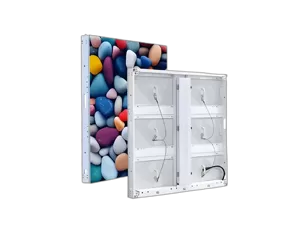
KMTEK’s Micro-COB Series includes P0.625, P0.78, P0.93, P1.25, P1.56, and P1.875 options. The module measures 150 × 168.75 mm, while the cabinet measures 600 × 337.5 × 30 mm.
For buyers, this means that pixel pitch should be evaluated together with the underlying packaging technology rather than treated as the only indicator of display quality.
The key difference between SMD, COB, and Micro-COB is how LED chips are packaged and integrated into the display module.
| Technology | Packaging approach | Main consideration | Typical application |
|---|---|---|---|
| SMD | Packaged LEDs mounted on PCB | Versatility and mature supply chain | Indoor and outdoor displays |
| COB | LED chips integrated into COB structure | Surface integration and protection | Fine-pitch applications |
| Micro-COB | Flip-chip COB packaging | High pixel density and close viewing | Premium indoor displays |
Micro-COB does not automatically replace other LED technologies. The appropriate choice depends on viewing distance, screen size, content, installation environment, and project budget.
For projects where fine pixel pitch is important, buyers can compare Micro-COB configurations with a small pitch LED display based on actual viewing requirements rather than choosing the smallest pitch available.
Micro-COB supports small pixel pitch LED display projects by combining fine pixel spacing with high pixel density in a compact display structure.
As pixel pitch decreases, more pixels can be placed within the same physical area. KMTEK’s Micro-COB Series reaches a maximum listed pixel density of 2,560,000 dots/m². It also specifies 16-bit grayscale, a 3840 Hz refresh rate, and 160° horizontal and vertical viewing angles.
These characteristics are useful for applications where audiences may view the display from relatively short distances, such as conference rooms, control environments, presentation spaces, and premium commercial interiors.
However, smaller pixel pitch is not always necessary. A P0.625 display may be appropriate for extremely close viewing, while P1.25 or P1.56 may already satisfy the visual requirements of another project. Viewing distance, screen dimensions, content type, and required resolution should therefore be considered together.
A Micro-COB specification sheet should be evaluated as a complete system rather than by pixel pitch alone.
Important parameters include:
Pixel pitch and density: These determine pixel spacing and image detail.
Brightness: KMTEK lists 500–800 cd/m² for its Micro-COB Series.
Refresh rate: The listed 3840 Hz specification supports smooth motion and camera-based content.
Contrast: The series specifies a 10,000:1 contrast ratio.
Brightness uniformity: KMTEK lists uniformity of at least 99%.
Power consumption: Maximum power is listed at 500 W/m², with average power of approximately 165–260 W/m².
Maintenance: Full front service is useful where rear access is restricted.
Operating environment: The listed operating temperature is -20°C to 50°C, with IP45 protection.
Cabinet weight: The cabinet is approximately 5.1 kg.
These specifications should always be matched against the actual installation environment and system requirements.
Micro-COB is most relevant when high pixel density, close viewing, compact construction, and front-side maintenance are important project requirements.
Conference rooms, control rooms, premium commercial interiors, and presentation environments can benefit from fine-pitch LED technology because viewers may be close enough to notice differences in pixel structure.
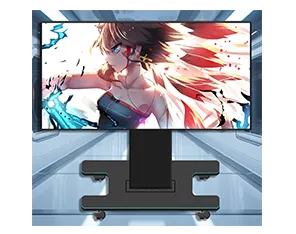
KMTEK lists several installation methods for its Micro-COB Series, including on-wall, recessed, pedestal, suspended, and stacked installation. The 30 mm cabinet depth can also help when installation space is limited.
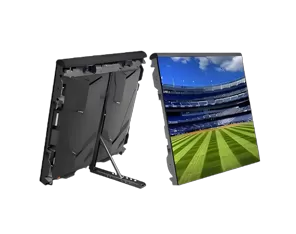
Outdoor projects require a different evaluation. Brightness, weather protection, cabinet sealing, and environmental durability become more important than ultra-fine pixel pitch. For these applications, buyers should consider an outdoor-specific LED display board china solution.
A reliable Micro-COB supplier evaluation should cover technical specifications, system configuration, documentation, and project support rather than focusing only on price or pixel pitch.
Before requesting a quotation, buyers should prepare the screen dimensions, viewing distance, installation location, content type, target resolution, operating environment, and maintenance requirements.
The supplier should provide specifications covering pixel pitch, pixel density, module and cabinet dimensions, brightness, refresh rate, grayscale, contrast, power consumption, operating temperature, protection rating, and maintenance method.
It is also useful to confirm calibration, spare module availability, control-system compatibility, installation method, and after-sales support. These factors can influence both initial project cost and long-term maintenance.
For international projects, buyers should also confirm that the proposed configuration and electrical components meet the requirements of the destination market.
If you are planning a Micro-COB project, providing the screen size, viewing distance, installation environment, and application gives KMTEK a practical basis for recommending the appropriate configuration.
Micro-COB should be evaluated as a complete fine-pitch LED solution rather than simply as a smaller pixel pitch. KMTEK’s Micro-COB Series offers configurations from P0.625 to P1.875, with high pixel density, 3840 Hz refresh, front-service access, and multiple installation options. The right configuration depends on viewing distance, screen size, brightness, installation conditions, maintenance access, and budget. By evaluating these factors together, buyers can avoid paying for unnecessary pixel density while ensuring the selected display meets the project's actual visual and technical requirements.
KMTEK lists P0.625, P0.78, P0.93, P1.25, P1.56, and P1.875 configurations.
The maximum listed pixel density is 2,560,000 dots/m².
Yes. Its fine pixel pitches and high pixel density make it suitable for close-viewing indoor applications.
Yes. KMTEK specifies full front service for its Micro-COB Series.
No. The appropriate pitch depends on viewing distance, screen size, content, resolution, and budget.
Provide screen dimensions, viewing distance, installation environment, application, resolution requirements, and maintenance conditions.

I’m Engineer Liang, a LED display specialist with 20 years of hands-on experience. My work spans panel assembly, system integration, and performance optimization across various product lines.
I’ve provided on-site after-sales support in over 30 countries, It solves problems such as pixel failure and signal instability in large installation projects ranging from commercial billboards to stadium screens.These trips honed my ability to adapt solutions to local environmental conditions.
Remotely, I have remotely assisted hundreds of customers with display calibration, software debugging and diagnostic, and operational guidance, including fine-tuning color uniformity on LED screens and resolving connectivity issues with control systems etc.
I focus on practical problem-solving, ensuring timely, effective support to minimize display failure, protect the interests of customers.Keeping pace with LED tech advancements, I aim to deliver reliable expertise to clients worldwide.