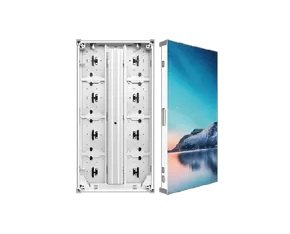
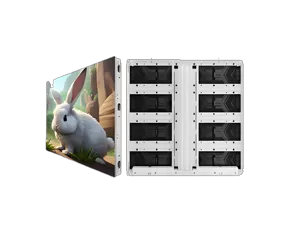
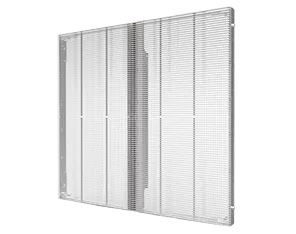
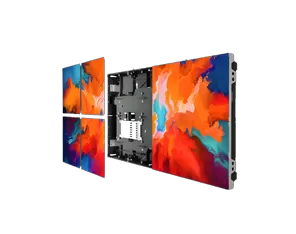
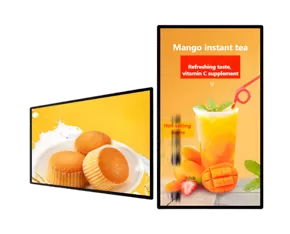
In today's digital-driven business environment, visual communication has become an essential part of brand promotion, customer engagement, and information delivery. From retail stores and corporate spaces to stadiums and outdoor advertising, LED displays provide businesses with a flexible and powerful way to present dynamic content.
However, choosing the right LED display is not simply about selecting the largest screen or the highest resolution. Different applications require different specifications, including pixel pitch, brightness, viewing distance, installation environment, and maintenance requirements.
This LED display buying guide explains the key factors businesses should consider when selecting an LED screen and how to choose the most suitable display solution for long-term performance and value.
An LED display is a digital visual solution that uses light-emitting diodes to create images, videos, and real-time information. Unlike traditional display technologies, LED screens are designed for scalability, allowing businesses to customize display sizes from small indoor screens to large outdoor video walls.
Modern commercial LED displays are widely used in:
Shopping malls and retail environments
Corporate meeting rooms and conference centers
Stadiums and sports venues
Transportation hubs
Advertising platforms
Entertainment events
Exhibition halls
The main advantage of LED technology is its ability to deliver high brightness, seamless images, wide viewing angles, and continuous operation for commercial applications.
For businesses looking to improve audience engagement, a professional LED display solution can provide stronger visual impact compared with traditional static advertising methods.
Selecting an LED screen requires evaluating both technical specifications and application requirements. The following factors play a major role in determining the final performance of a display system.
The first consideration is where the LED display will be installed.
Indoor LED Displays
Indoor LED screens are designed for controlled environments where lighting conditions are relatively stable. They are commonly used in:
Retail stores
Conference rooms
Control centers
Exhibition spaces
Corporate showrooms
Indoor applications usually focus on image quality, color accuracy, and close viewing performance.
Outdoor LED Displays
Outdoor environments create additional challenges, including direct sunlight, rain, dust, and temperature changes. Therefore, outdoor LED screens require:
Higher brightness levels
Weather-resistant structures
Waterproof protection
Better heat dissipation
For outdoor advertising, stadiums, and public information displays, selecting a dedicated outdoor LED display ensures reliable operation in different weather conditions.
Pixel pitch is one of the most important specifications when selecting an LED display.
Pixel pitch refers to the distance between two LED pixels, measured in millimeters. Generally, a smaller pixel pitch provides higher image detail and is suitable for shorter viewing distances.
| Application | Pixel Pitch Consideration |
|---|---|
| Conference rooms and control centers | Smaller pixel pitch for detailed images |
| Retail advertising displays | Medium pixel pitch balancing image quality and cost |
| Large outdoor billboards | Larger pixel pitch for long-distance viewing |
A common mistake is choosing the smallest pixel pitch available without considering actual viewing conditions.
The ideal pixel pitch depends on:
Viewing distance
Screen size
Content type
Budget requirements
A professional LED display manufacturer can recommend the most suitable configuration based on the project environment.
Brightness directly affects how clearly an LED display can be viewed under different lighting conditions.
For indoor applications, extremely high brightness is usually unnecessary and may affect viewing comfort. However, outdoor installations require stronger brightness performance to maintain visibility under direct sunlight.
When evaluating brightness, businesses should consider:
Installation direction
Sunlight exposure
Viewing distance
Operating time
Besides brightness, other image performance factors should also be considered, including:
Refresh rate
Color reproduction
Contrast ratio
Viewing angle
A high refresh rate LED display is especially important for applications involving video playback, broadcasting, and professional events.
Many buyers focus heavily on resolution when purchasing an LED screen. However, resolution performance depends on the combination of pixel pitch, screen size, and viewing distance.
A well-designed LED display should provide:
Smooth video playback
Clear text visibility
Accurate color presentation
Consistent brightness
Seamless visual performance
For applications such as advertising, retail, and entertainment, the overall viewing experience is often more important than resolution specifications alone.
The price of an LED display depends on multiple elements rather than only the screen size.
Key factors affecting cost include:
Larger displays require more LED modules, cabinets, and control systems, increasing the overall investment.
Smaller pixel pitch LED displays usually require more advanced technology and higher manufacturing precision, which may increase costs.
Outdoor LED displays require additional protection features, including waterproofing, brightness enhancement, and structural durability.
A complete LED project may also include:
Installation structure
Control system
Power management
Maintenance support
Businesses should evaluate total ownership cost rather than only the initial purchase price.
Selecting the right supplier is a critical step in ensuring long-term display performance.
A reliable LED display manufacturer should provide:
Experienced manufacturers understand different application requirements and can recommend suitable solutions.
LED displays require consistent quality in modules, cabinets, power systems, and control components.
Different projects may require customized sizes, shapes, brightness levels, or installation methods.
Professional support before and after installation helps reduce operational risks.
Choosing a manufacturer with strong engineering capability can help businesses achieve better performance and lower maintenance costs.
Choosing the right LED display requires a comprehensive understanding of application requirements, viewing conditions, technical specifications, and supplier capability.
Whether used for advertising, retail, stadiums, corporate spaces, or entertainment applications, the best LED screen solution should balance image quality, durability, cost, and long-term reliability.
KMTEK LED provides customized commercial LED display solutions designed for different industries, helping businesses create impactful visual experiences with advanced LED technology and professional manufacturing support.

I’m Engineer Liang, a LED display specialist with 20 years of hands-on experience. My work spans panel assembly, system integration, and performance optimization across various product lines.
I’ve provided on-site after-sales support in over 30 countries, It solves problems such as pixel failure and signal instability in large installation projects ranging from commercial billboards to stadium screens.These trips honed my ability to adapt solutions to local environmental conditions.
Remotely, I have remotely assisted hundreds of customers with display calibration, software debugging and diagnostic, and operational guidance, including fine-tuning color uniformity on LED screens and resolving connectivity issues with control systems etc.
I focus on practical problem-solving, ensuring timely, effective support to minimize display failure, protect the interests of customers.Keeping pace with LED tech advancements, I aim to deliver reliable expertise to clients worldwide.