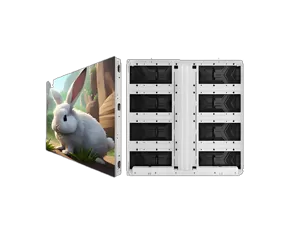
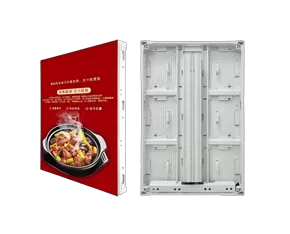
MicroCOB is an LED packaging approach that mounts LED chips directly onto a substrate and encapsulates them as part of a compact display structure. It is often considered for fine-pitch display applications where pixel density, surface protection, and close-viewing performance are important. However, the suitability of MicroCOB depends on the project's technical requirements, operating environment, maintenance expectations, and budget.
For buyers comparing fine-pitch LED technologies, the key question is not whether one packaging method is universally superior. It is whether the technology meets the needs of the intended application. This guide explains what to evaluate before specifying MicroCOB and how KMTEK can help clarify project requirements.
MicroCOB refers to a Chip-on-Board approach used in LED displays. LED chips are mounted directly onto a substrate rather than being individually packaged in the same way as conventional SMD LEDs. The chips are then protected through an encapsulation process defined by the manufacturer's design.
This packaging approach can support compact pixel arrangements and an integrated display surface. Depending on the implementation, it may also offer benefits related to surface protection and the handling of fine-pitch display structures. Actual performance varies according to product design, materials, manufacturing quality, and system configuration.
Buyers should not treat the name alone as proof of a particular performance level. Specifications such as pixel pitch, brightness, contrast, color consistency, refresh rate, and serviceability still need to be verified for the specific product.
When evaluating MicroCOB, request technical documentation that describes the actual display rather than relying solely on general technology claims. The project should be specified around measurable requirements and confirmed product capabilities.
The packaging structure can influence the physical surface of an LED display and how its LEDs are protected. In a MicroCOB design, direct chip mounting and encapsulation can create an integrated structure, but the resulting durability and image characteristics depend on the complete manufacturing process.
For close-viewing environments, buyers should assess pixel pitch and image quality alongside brightness adjustment, grayscale performance, color uniformity, and refresh rate. These factors contribute to the perceived image and are particularly relevant when the screen shows detailed information, gradients, or motion.
Surface protection should also be assessed in relation to the actual environment. A display used in a controlled meeting room faces different conditions from one exposed to frequent physical contact or demanding maintenance routines. Ask the manufacturer for applicable product ratings and care instructions instead of assuming that a packaging technology guarantees resistance to every type of impact, dust, or moisture.
A product demonstration can help buyers evaluate visible image quality, but technical documentation and application-specific testing remain important. The chosen system must meet both visual and operational requirements.
MicroCOB may be worth considering when a project requires fine pixel spacing, close viewing, or a display surface designed around an integrated packaging structure. Potential applications include control rooms, premium meeting spaces, studios, and other environments where image detail and consistent presentation are priorities.
Before shortlisting a solution, identify the most important project criteria:
Viewing conditions: Determine the closest viewing distance and the type of content users need to read.
Image requirements: Define acceptable brightness, color consistency, contrast, and motion performance.
Operating environment: Identify expected contact, cleaning routines, temperature conditions, and other relevant environmental factors.
Maintenance planning: Confirm how modules or components are serviced and which procedures are permitted.
Total project cost: Consider the display, processing equipment, installation, maintenance, and expected operating requirements.
These criteria provide a more reliable basis for selection than choosing technology by name. If the project does not require very fine pixel spacing or the specific characteristics of the proposed packaging, a different LED configuration may meet the requirements more economically.
MicroCOB, SMD, and GOB describe different aspects of LED packaging or surface protection. They should not be compared as if they were identical product categories. The following table highlights general distinctions; actual specifications depend on the manufacturer and model.
Technology or approach | General design characteristic | What buyers should verify |
|---|---|---|
MicroCOB | LED chips mounted directly onto a substrate with encapsulation | Pixel pitch, image quality, protection, maintenance approach |
SMD LED | LEDs use individual surface-mount packages | Package design, pixel pitch, color consistency, serviceability |
GOB | An additional protective layer is applied over an LED module surface | Protection characteristics, optical effects, repair procedures |
MicroCOB and SMD are not interchangeable terms, and GOB describes a different protective approach. The most suitable choice depends on the exact implementation and project conditions.
When comparing MicroCOB with other fine-pitch solutions, ask suppliers to provide equivalent data for pixel pitch, brightness, refresh rate, power requirements, and maintenance. This prevents a technology label from overshadowing the specifications that actually determine performance.
A small pixel pitch LED display may use different packaging approaches depending on the manufacturer's product range. Buyers should compare the actual models under consideration rather than assume that all displays within a particular pixel-pitch category use the same technology.
Before requesting a quotation, define the screen dimensions, viewing distance, installation environment, content type, operating hours, and expected maintenance process. Then ask the supplier to recommend a configuration and explain how the proposed technology meets each requirement.
Request the model-specific datasheet and confirm the rated brightness, pixel pitch, refresh rate, grayscale performance, power consumption, installation method, and warranty. Ask about module replacement procedures, maintenance access, and spare-part availability.
For a fair comparison, obtain quotations based on the same screen size, resolution, installation assumptions, and accessories. If possible, arrange a demonstration or sample evaluation under conditions similar to the intended application.
When evaluating a MicroCOB LED display, buyers should also clarify which performance claims are supported by test data and which are general descriptions of the technology. This is especially important when comparing durability, image quality, and service requirements across different packaging approaches.
KMTEK can be approached with the project requirements and the specifications that matter most. Rather than assuming MicroCOB is the right choice for every fine-pitch installation, evaluate it alongside other suitable options and select the configuration that best fits the required image quality, operational needs, and budget.
No. MicroCOB uses a chip-on-board packaging approach, while SMD LEDs use individual surface-mount packages. Check the technical documentation for the specific product.
No. Suitability depends on viewing distance, image requirements, operating conditions, maintenance expectations, and budget.
Not automatically. Contrast depends on the full display design, including LED characteristics, surface treatment, driving system, and viewing conditions.
Repair procedures depend on the manufacturer's design and service method. Ask about module replacement, repair limitations, spare parts, and warranty coverage before purchasing.
Compare pixel pitch, brightness, refresh rate, color performance, power requirements, maintenance access, installation scope, warranty, and total cost.
No. Cost-effectiveness depends on the project requirements and complete system cost, including installation and maintenance. Compare solutions using equivalent specifications and application assumptions.

I’m Engineer Liang, a LED display specialist with 20 years of hands-on experience. My work spans panel assembly, system integration, and performance optimization across various product lines.
I’ve provided on-site after-sales support in over 30 countries, It solves problems such as pixel failure and signal instability in large installation projects ranging from commercial billboards to stadium screens.These trips honed my ability to adapt solutions to local environmental conditions.
Remotely, I have remotely assisted hundreds of customers with display calibration, software debugging and diagnostic, and operational guidance, including fine-tuning color uniformity on LED screens and resolving connectivity issues with control systems etc.
I focus on practical problem-solving, ensuring timely, effective support to minimize display failure, protect the interests of customers.Keeping pace with LED tech advancements, I aim to deliver reliable expertise to clients worldwide.