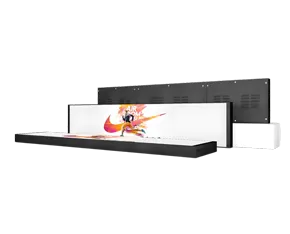
Choosing a glasses-free 3D display should begin with the viewing environment, screen size, pixel pitch, installation geometry and content strategy—not with display specifications alone. A smaller pixel pitch can improve close-range image detail, but a convincing 3D effect also depends on where viewers stand, how the screen is installed and whether the content is designed specifically for spatial depth.
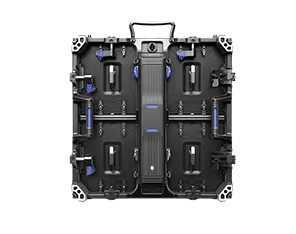
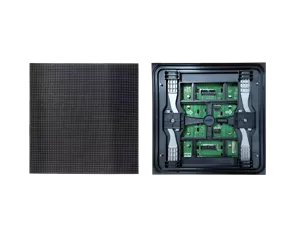
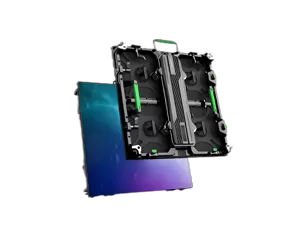
KMTEK's current glasses-free 3D display range includes multiple pixel-pitch options, including P1.95, P2.604, P2.97 and P3.91, allowing buyers to match display density to different viewing distances and project scales.
A strong glasses-free 3D display experience is created by several elements working together.
The display hardware provides image resolution, brightness, refresh performance and viewing capability, but hardware alone does not create a convincing three-dimensional illusion.
The final result depends on four main elements:
Display hardware + installation geometry + viewing position + 3D content
The screen must provide enough image detail for the intended viewing distance. The installation must guide viewers toward the intended visual zone. Most importantly, the content must use perspective, depth, movement and object positioning to create the illusion that objects extend into or out of the display.
This leads to an important purchasing principle:
Buying a 3D-capable screen does not automatically guarantee a strong glasses-free 3D effect.
The display and the content workflow should be planned together from the beginning.
Pixel pitch is one of the first technical specifications buyers compare, but it should always be evaluated together with viewing distance.
For projects where viewers stand relatively close to the screen, a smaller pixel pitch can help preserve fine detail and reduce the visibility of individual pixels.
For larger installations viewed from farther away, using the smallest possible pixel pitch may increase investment without creating a noticeable improvement for the audience.
Before selecting a glasses-free 3D screen, define:
closest expected viewing distance;
main audience viewing zone;
screen width and height;
installation height;
main viewing direction;
level of content detail.
For example, a technology showroom displaying detailed products may benefit from a smaller pitch than a large visual installation designed mainly for dramatic motion and depth effects.
The goal is not to select the smallest available pixel pitch. It is to choose the pitch that provides suitable visual detail at the actual viewing distance.
Content planning is one of the most overlooked parts of a glasses-free 3D project.
A conventional advertising video does not automatically become three-dimensional when it is played on a glasses-free 3D display.
Effective 3D content normally needs to consider:
visual perspective;
foreground and background depth;
virtual object position;
object movement;
screen boundaries;
main viewing direction;
content resolution;
screen shape and dimensions.
For example, an object that appears to extend beyond the display surface must be positioned and animated around the intended viewing angle.
This means that hardware purchase and content planning should happen together.
Before ordering the screen, buyers should determine who will create the 3D content, how frequently the content will change, which aspect ratio and resolution will be used, and whether the content must be adapted to a specific installation shape.
The same principle also applies to smaller autostereoscopic 3D display projects: the screen can provide the display platform, but the content determines how convincing the depth effect becomes.
Different installation formats support different project objectives.
A flat display is suitable for showrooms, exhibitions, educational environments and other applications where the screen is viewed mainly from the front.
A corner or L-shaped display can create stronger perspective effects when the content is designed around the physical corner. This format is often used when the project aims to create the illusion that objects occupy a deeper virtual space.
A custom architectural display may be appropriate for shopping malls, museums, science centers or flagship brand spaces where the LED structure is integrated into the surrounding architecture.
However, a more complex screen shape does not automatically create a better 3D experience.
The correct decision should follow:
Project objective → architecture → viewing direction → display geometry → content design
The installation should support the visual concept instead of forcing the content to compensate for an unsuitable screen layout.
The value of glasses-free 3D displays comes from their ability to communicate depth and visual scale without requiring viewers to wear special glasses.
Retail and brand launches can use 3D effects to make products visually prominent and attract attention in high-traffic environments.
Museums and science centers can use spatial visualization to explain objects, structures or educational concepts that are difficult to communicate with conventional flat video.
Technology showrooms can use 3D content to create a stronger visual demonstration of products and reinforce a technology-focused brand image.
Entertainment venues can use dramatic depth and motion effects to create a more immersive audience experience.
The key question is not simply where a glasses-free 3D screen can be installed, but whether the project has a visual communication objective that benefits from three-dimensional content.
An accurate quotation requires more than screen width and height.
| Buyer Should Provide | Why It Matters |
|---|---|
| Installation location | Defines the project environment |
| Screen dimensions | Determines system scale |
| Viewing distance | Helps select pixel pitch |
| Main viewing direction | Influences 3D content planning |
| Installation shape | Flat, corner or custom |
| Content type | Defines the content workflow |
| Resolution requirement | Determines image detail |
| Operating hours | Supports system planning |
| Installation drawing | Supports structural planning |
| Control requirements | Defines playback and signal needs |
Providing an installation drawing together with the expected audience position is particularly useful. It allows the supplier to evaluate the display as part of the complete visual environment rather than treating it as an isolated screen.
A successful glasses-free 3D display project should not be reduced to a comparison such as P2.6 versus P3.9.
The final visual result depends on:
Screen + viewing geometry + installation + 3D content + control system
Buyers should define viewing distance, screen size, content objectives, installation shape and audience position before finalizing pixel pitch and system configuration.
By treating the display as a complete visual system, businesses can avoid purchasing hardware first and discovering later that the viewing environment or content does not support the intended 3D effect.
A glasses-free 3D display creates a perceived three-dimensional image without requiring viewers to wear special 3D glasses.
Yes. Purpose-designed 3D content is usually required to create convincing perspective, depth and spatial effects.
The correct pixel pitch depends on viewing distance, screen size, content detail and project budget.
There is no single ideal distance. It should be matched to pixel pitch, screen dimensions and the main audience viewing zone.
Provide the screen size, viewing distance, installation location, screen shape, content requirements, operating conditions and installation drawings.

I’m Engineer Liang, a LED display specialist with 20 years of hands-on experience. My work spans panel assembly, system integration, and performance optimization across various product lines.
I’ve provided on-site after-sales support in over 30 countries, It solves problems such as pixel failure and signal instability in large installation projects ranging from commercial billboards to stadium screens.These trips honed my ability to adapt solutions to local environmental conditions.
Remotely, I have remotely assisted hundreds of customers with display calibration, software debugging and diagnostic, and operational guidance, including fine-tuning color uniformity on LED screens and resolving connectivity issues with control systems etc.
I focus on practical problem-solving, ensuring timely, effective support to minimize display failure, protect the interests of customers.Keeping pace with LED tech advancements, I aim to deliver reliable expertise to clients worldwide.